
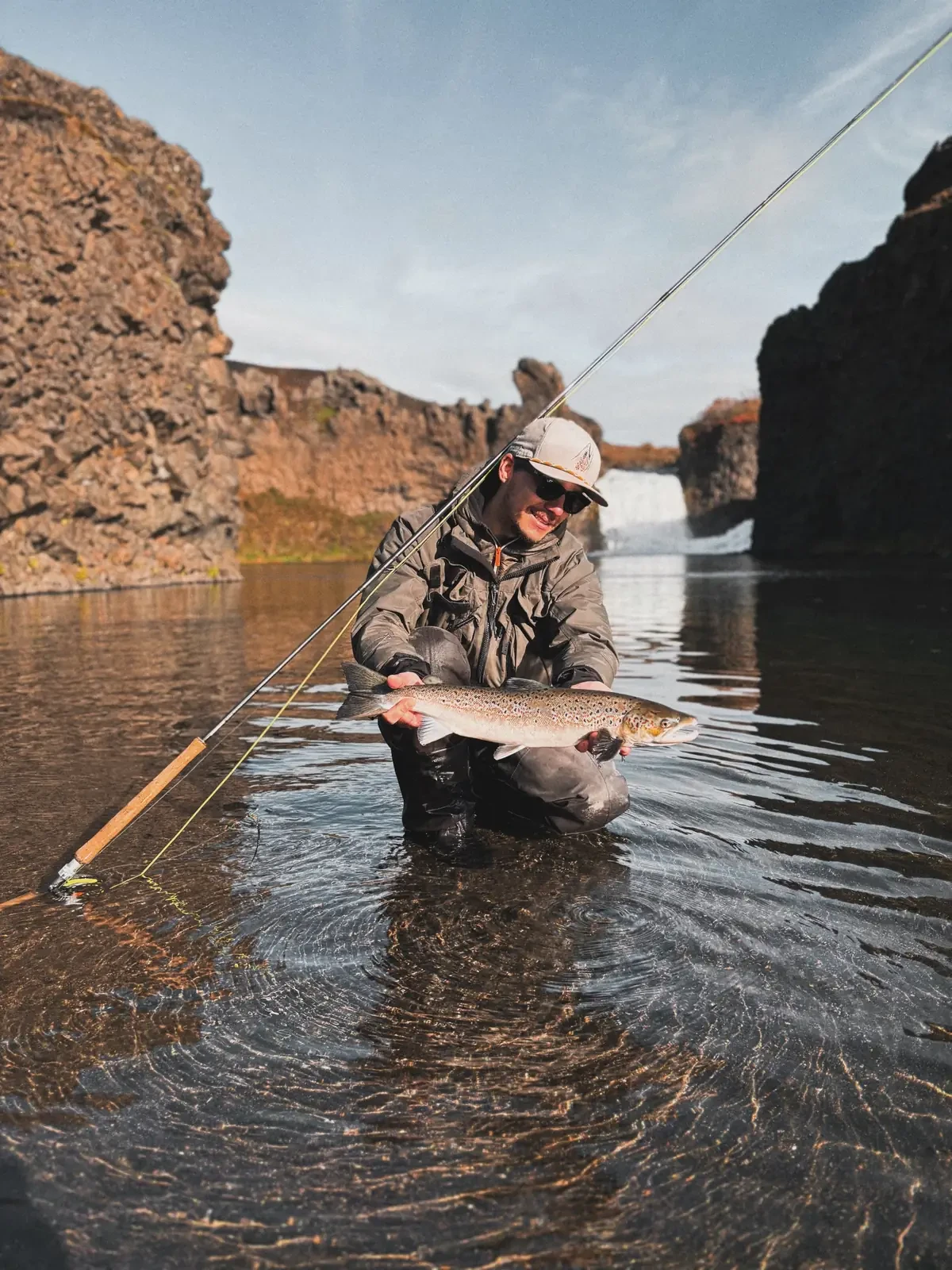
Plan Your Perfect Fly Fishing Trip in Iceland
Discover the best time to fly fish in Iceland, explore brown trout, Arctic char, salmon and sea trout opportunities, and find guided or self-guided fishing experiences tailored to your trip.
When are you planning to visit?
Choose your travel month to see what species are available.
Fly Fishing in Iceland — Common Questions
When is the best time to fly fish in Iceland?
The main fly fishing season runs from April to October. Brown trout and Arctic char are available from April or May through September. Atlantic salmon run from June to October, and sea trout are best in April–May and September–mid-October. July and August offer the widest range of species and the longest daylight hours.
Can beginners go fly fishing in Iceland?
Yes. Our Arctic Char & Brown Trout guided day is ideal for beginners. Your private guide adapts the instruction and approach to your level, and all equipment is provided. No prior fly fishing experience is required.
Do visitors need a fishing permit in Iceland?
Yes. All fishing in Iceland requires a valid fishing permit, and most rivers also require a fishing licence. On our guided tours, permits and licences are included in the price. Self-guided anglers must purchase permits separately for each river or lake they fish.
What is the difference between guided and self-guided fishing in Iceland?
A guided day includes a private local guide who selects the water, provides all equipment, coaches your technique, and handles permits. Self-guided fishing gives you independence to fish at your own pace, but you arrange your own permits, equipment and river access. Guided fishing is recommended for visitors unfamiliar with Icelandic rivers.
Which fish species can I catch in Iceland?
Iceland's main fly fishing species are brown trout, Arctic char, Atlantic salmon and sea trout. Brown trout and Arctic char are the most widely available. Salmon and sea trout are migratory and highly season- and location-dependent. All fish are wild and unfarmed.