Fishing Guide in Iceland: What to Expect and How to Book
A private fishing guide is the surest way to turn a few days in Iceland into fish in the net. Here is what a guide actually does, which fish to target and when, what it costs, and how a guided day compares with going self-guided.
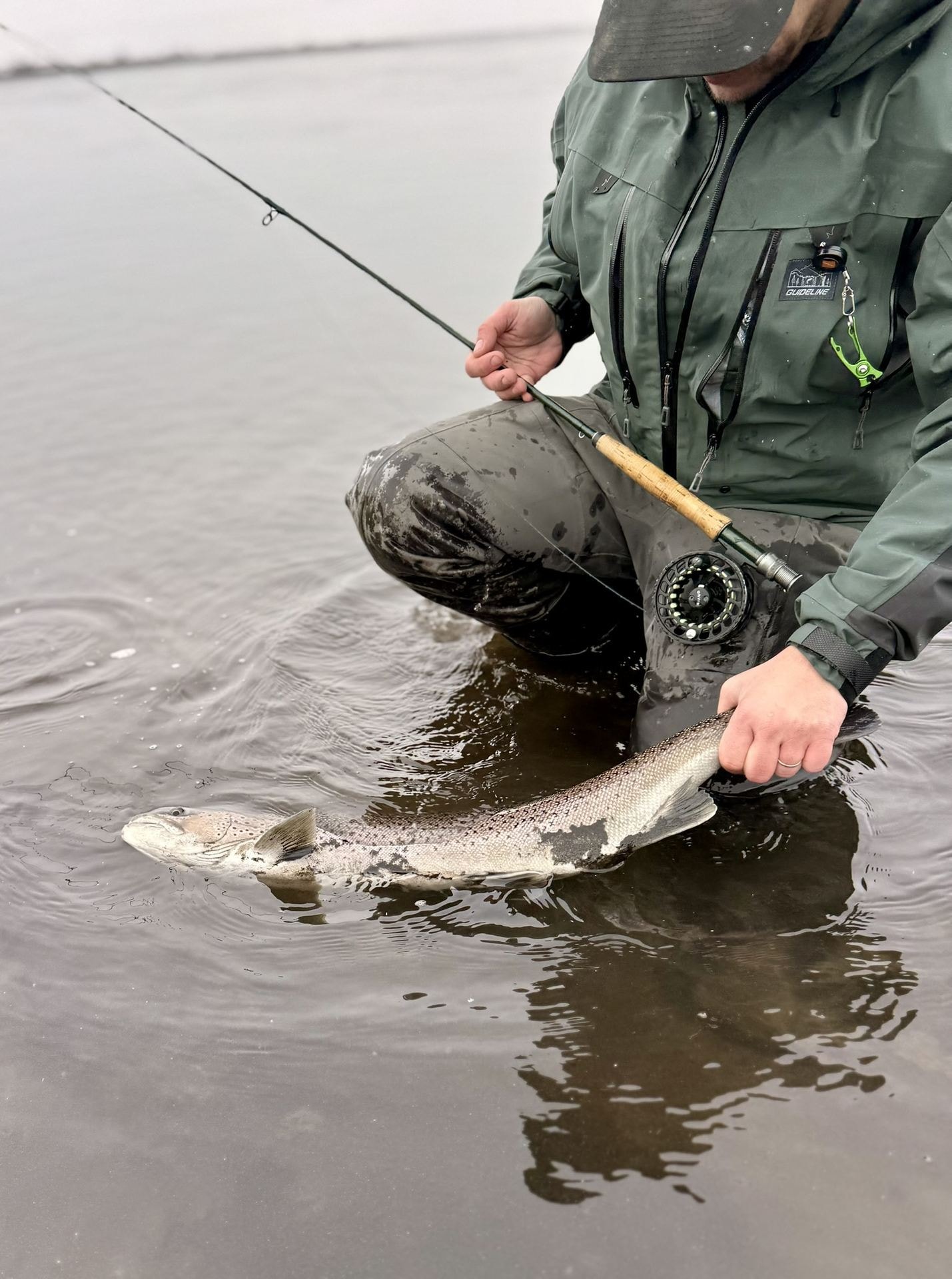
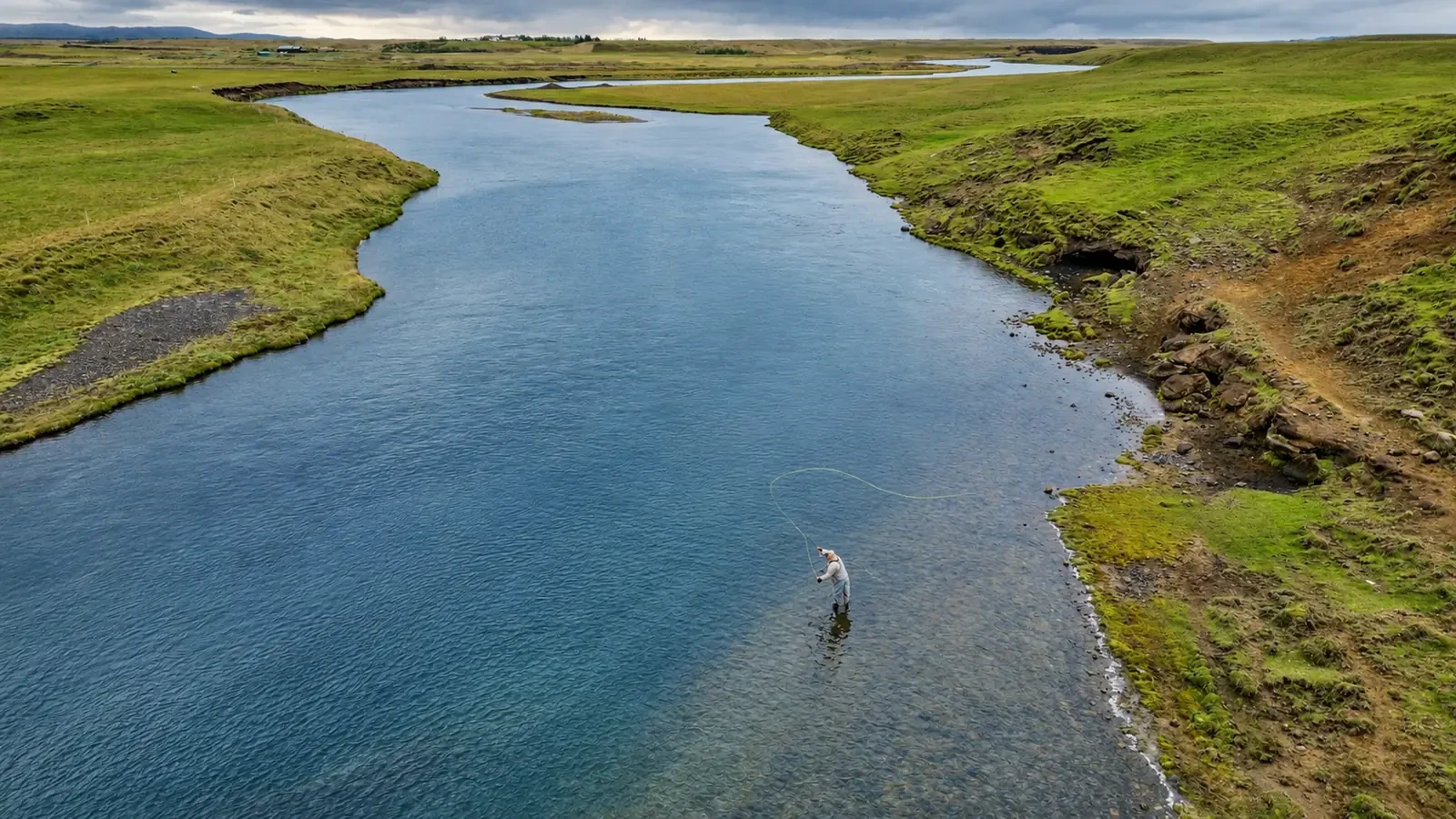
A private fishing guide is the surest way to turn a few days in Iceland into fish in the net. Iceland's rivers are regulated water by water, conditions change within hours, and the best beats are easy to miss without local knowledge. At Reel in Iceland, our founder has 13 years of local experience and leads every trip himself, in small private groups. Guests fish for Arctic char, brown trout, sea trout and Atlantic salmon in South Iceland, with Reykjavík-area pickup, fishing licences and equipment included on guided tours.
This guide covers what a guide actually does, which fish to target and when, what the trip costs, and how a guided day compares with a self-guided trip.
Short
- A guide picks the river, beat and fly for the day's conditions, and teaches casting and reading water. That matters most for beginners and for anyone chasing a trophy fish.
- Many Icelandic waters fish from April to October. Char and brown trout come first, salmon from around mid-June, and sea trout in late season.
- Our guided day tours are priced from €650 to €1,240. Self-guided packages with licences, GPS-marked itineraries and a pre-trip briefing run from €440 to €690.
- Every river has its own rules and season, so licences are tied to specific waters, not the whole country.
- Private trips mean no large groups and no rushed schedule. Pickup in the Reykjavík area, licences and gear are included on guided tours.
Table of Contents
- What a fishing guide in Iceland does
- Which fish you can target
- When to go
- How much a fishing guide in Iceland costs
- Private guided tour or self-guided: which fits you
- How to plan the trip
- Booking a private trip with Reel in Iceland
- FAQ
What a Fishing Guide in Iceland Does
In Iceland a guide is much more than someone who drives you to a river. The job has four parts.
Choosing the water. Icelandic rivers are spring-fed, runoff-fed or glacial, and temperature and water conditions differ from river to river. A beat that fished well last week can be blown out by rain or too cold after a clear night. A guide who fishes the same water all season reads those changes and moves you to the right stretch.
Handling access and licences. Fishing rights here are managed per river, often with a limited number of rods. On our guided tours the licence is part of the booking, so you never have to work out who controls which beat.
Teaching. For beginners that means grip, casting, mending and how to present a fly. For experienced anglers it means fine-tuning: how deep to fish, which line to use, where a big brown is likely to hold. Our trips are tailored to your experience and preferences, so a first-timer and a veteran on the same river get different days.
Running the day. Transport along the river, equipment, Reykjavík pickup, and a pace that follows the fishing instead of a timetable. We also photograph the day, so you leave with pictures of your fish and the landscape as well as the memory.
What Beginners Can Expect
You do not need to arrive with gear or experience. The day starts with the basics on the bank, a short casting lesson, and a simple setup that gives you the best chance of a fish. Your guide stays within a few steps of you, fixes tangles, ties the knots and tells you when to strike. Small wild trout and char are a good first target because they take flies readily in the right water, and a few quick fish early in the day builds confidence for the rest of it.
We suggest Arctic char and brown trout as the starting point for first-time fly anglers.
What Experienced Anglers Can Expect
If you already cast well, a guide saves you the learning curve of the river itself. You spend your hours on the right pools, with the right presentation for that day's flow, instead of testing water. Anglers who want a big fish usually choose the trophy brown trout day, where the whole plan is built around larger, harder fish rather than numbers.
Which Fish You Can Target
South Iceland's rivers hold four main species of interest to fly anglers.
| Species | What it is like | Where to start |
|---|---|---|
| Arctic char | Colourful, willing, found in many rivers and lakes | Arctic char and brown trout day |
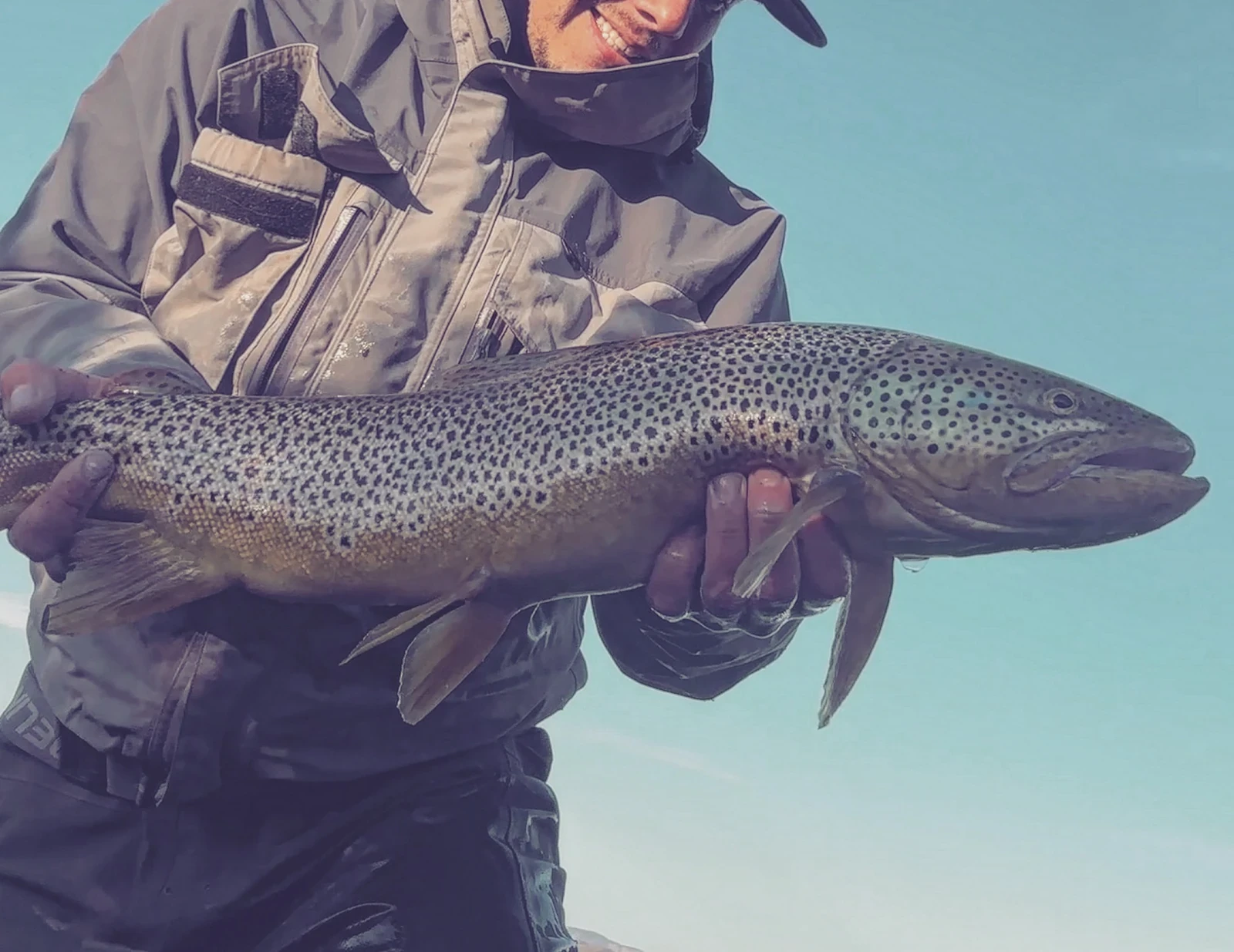
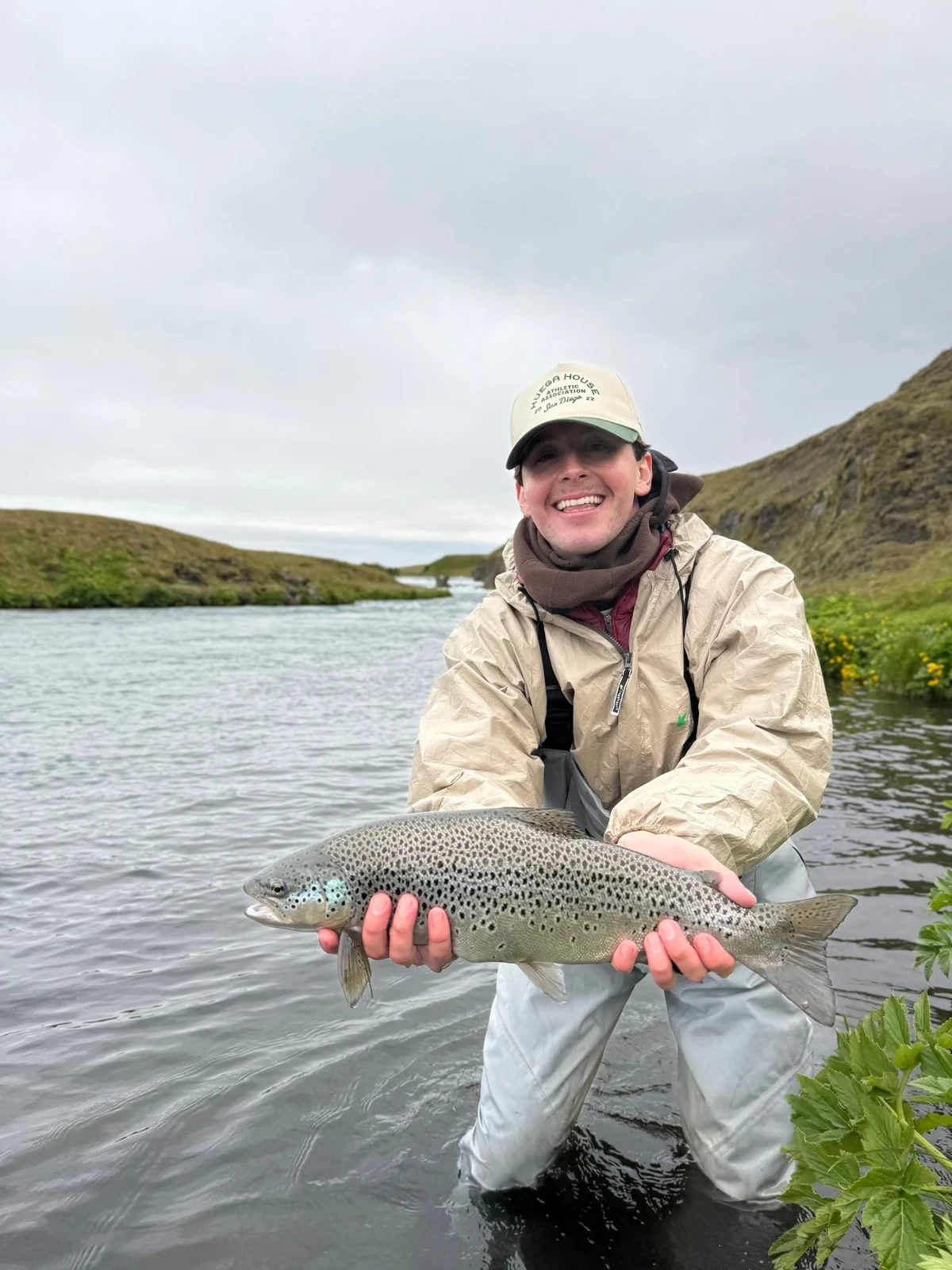
| Brown trout | Wild fish, from steady fishing to trophy size | Trophy brown trout day |
| Sea trout | Sea-run brown trout, strong and most active late in the season | Sea trout tours |
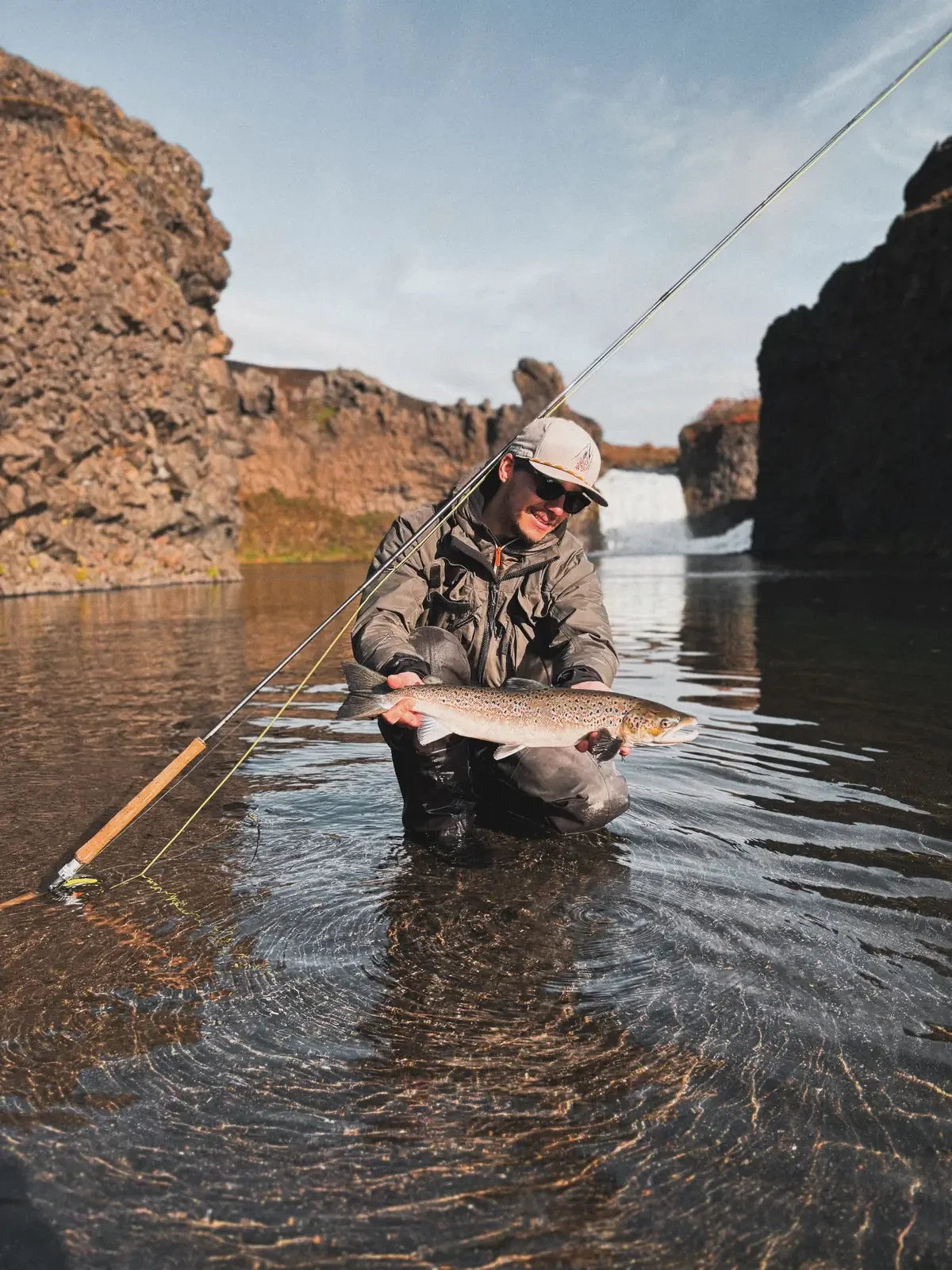
| Atlantic salmon | The headline fish, from mid-summer | Salmon tours |
Iceland's official tourism site notes that the country's angling ranges from large leased salmon rivers to small fly-only char and sea trout rivers, some limited to just three rods. That variety is why matching the species to the river and the month is the first decision. Our guide to what fish you can catch in Iceland goes deeper on each one.
If you want more than one species in a single trip, we also run multi-day formats: a Wild Trout Circuit, a Three Species Challenge and a Salmon River Expedition. All are on our tours page.
When to Go
The season decides which fish you meet. As a general pattern, many Icelandic fishing areas run from April to October:
- April and May: char, brown trout and sea trout. Early-season water is quieter and the landscape is still wintry.
- Mid-June onward: the first salmon appear.
- July and August: the productive salmon months, including larger fish.
- September and October: sea trout and brown trout where waters stay open. Sea-run brown trout can be fished from April 1 to October 10, or only through September 30 on waters where wild salmon dominate the catch — September and October are prime months, especially in the southeast.
Two cautions apply. First, these are general patterns, not opening dates for every river. Local seasons differ: one west Iceland catchment, for example, lists char and brown trout from April 1 to June 30, then adds salmon from July 1 to September 20. Second, salmon fishing is bounded by law: river salmon angling is limited to a maximum of 105 days within May 20 to September 30, with longer windows only for ocean-ranching rivers that have permission from the Directorate of Fisheries.
The practical answer is to tell us the month you can travel and the fish you want, and we match the river to it. Our posts on the best time to fly fish in Iceland and Iceland fishing seasons give the month-by-month detail.
How Much a Fishing Guide in Iceland Costs
Costs depend on the fish, the length of the trip and the format.
| Format | Published price | What is included |
|---|---|---|
| Guided day tour: Arctic char and brown trout | €650 to €1,240 | Private guiding, licence, equipment, river transport, Reykjavík-area pickup |
| Guided day tour: trophy brown trout | €650 to €1,240 | Same, built around larger fish |
| Self-guided: Arctic char and brown trout | €440 to €690 | Licences, GPS-marked itinerary, recommended flies, pre-trip briefing |
Sea trout, salmon and the multi-day expeditions are quoted per trip — ask us for current figures and dates on the tours page.
The range inside the day-tour price depends on the trip you choose and the conditions of the water. Because the guided price already includes the licence, equipment, river transport and pickup, you are not adding separate line items on top. That makes the budget easy to plan before you land. For a full breakdown, see our guide to fly fishing in Iceland prices.
Private Guided Tour or Self-Guided: Which Fits You
Both work in Iceland, and the choice comes down to experience and what you want from the day.
Choose a private guided day if you are new to fly fishing, you have only one or two days, you want a big fish, or you simply want the day handled. You get instruction, the right water on the right day, and a guide who adjusts as conditions shift. Nothing is shared with a large group.
Choose a self-guided package if you are confident casting and reading water and want the freedom to set your own pace. Our self-guided Arctic char and brown trout package comes with licences, GPS-marked itineraries, recommended flies and a briefing before you travel, so you arrive knowing where to go and what to tie on.
Many anglers combine the two: a guided first day to learn the river and its habits, then a self-guided day applying what they learned.
How to Plan the Trip
- Pick your fish. Decide whether char and brown trout, a trophy brown, sea trout or salmon matters most. Salmon needs a summer date. Sea trout and brown trout reward late-season travel.
- Pick your month. Use the season pattern above, then confirm river-specific dates, because many waters close in September.
- Choose guided or self-guided. Use the comparison above, and be honest about your casting.
- Allow for weather. Icelandic weather can change fast, and experienced operators talk about all four seasons in a single day. Waterproof layers matter more than fancy gear. Our Iceland fly fishing packing list covers what to bring, and on guided tours the fishing equipment is already supplied.
- Check the rules. Our overview of Iceland fly fishing regulations explains how access and licences work. On a guided tour, we take care of it for you.
- Book early for peak dates. July and August salmon dates and early-season weekends are the first to fill, since we run private trips with one guide at a time.
If you want help putting these pieces together, our fishing trip planner is the place to start.
Booking a Private Trip with Reel in Iceland
Our trips are led by our founder, an angler with 13 years of local expertise, on rivers known for wild brown trout, Arctic char, sea trout and Atlantic salmon. Each day is shaped around your skill, your goals and the river conditions. There are no large groups and no rushed schedule, and pickup in the Reykjavík area, fishing licences and equipment are included on guided tours.
See the full list of trips on our guided fly fishing tours page, or give the day as a present with a fishing gift voucher.
If you are still choosing, start with the species you most want to catch and tell us your travel month. We will suggest the river and the format that fit. Get in touch and we will take it from there.
FAQ
Do I need a guide to fish in Iceland?
No law requires one, but fishing rights are managed river by river, and the right beat changes with conditions. A guide covers licences, access, equipment and instruction in one booking. If you prefer to go alone, a self-guided package with licences and a marked itinerary gives you the same starting knowledge.
What is the best month to fish with a guide in Iceland?
It depends on the species. April and May suit char and brown trout, salmon arrive from around mid-June and peak in July and August, and September and October favour sea trout and brown trout where waters remain open. Tell us your dates and we will match a river to the fish.
Can complete beginners take a guided fishing tour?
Yes. Our guided tours include beginner instruction and all the equipment and licences, and the day is tailored to your level. Arctic char and brown trout are a good first target.
How much does a private fishing guide cost in Iceland?
Our guided day tours for Arctic char, brown trout and trophy brown trout are priced from €650 to €1,240. Self-guided Arctic char and brown trout packages run from €440 to €690. Sea trout, salmon and multi-day trips are quoted individually.
What fish can I catch on a guided trip?
Arctic char, brown trout, sea trout and Atlantic salmon. Each has its own best season and river type, so the species you want determines when and where we fish.
Related reading: Do you need a guide for fly fishing in Iceland? · Iceland fishing seasons explained · Fly fishing in Iceland: everything you need to know
Explore Topics
Written by
Ján Chamula
Expert fly fishing guides based in Iceland, sharing local knowledge, fishing tips and stories from Iceland's wild rivers.